
Welcome to the Winson Pneumatic & Hydraulic Struts official website!
 Tel:+86 13780014913
  E-mail:[email protected]



Why Won't Your Lockable Gas Spring "Lock" Anymore?
Author:Winson Gas Spring & Hydraulic Damper
Click:
Time:2026-02-26 11:14:58
Common Failure Causes and Replacement Guide
A lockable gas spring—that helpful component allowing your office chair to recline, your hospital bed to position precisely, and your industrial worktable to hover safely—has suddenly 'gone on strike.'
You adjust the angle, release your hand, and it slowly slides back. You lock it in position, place a load on it, and it quietly sinks. It worked perfectly when new—so why won't it lock anymore?
Today, we delve into the three main culprits behind lockable gas spring failure—and tell you when to repair, and when to replace.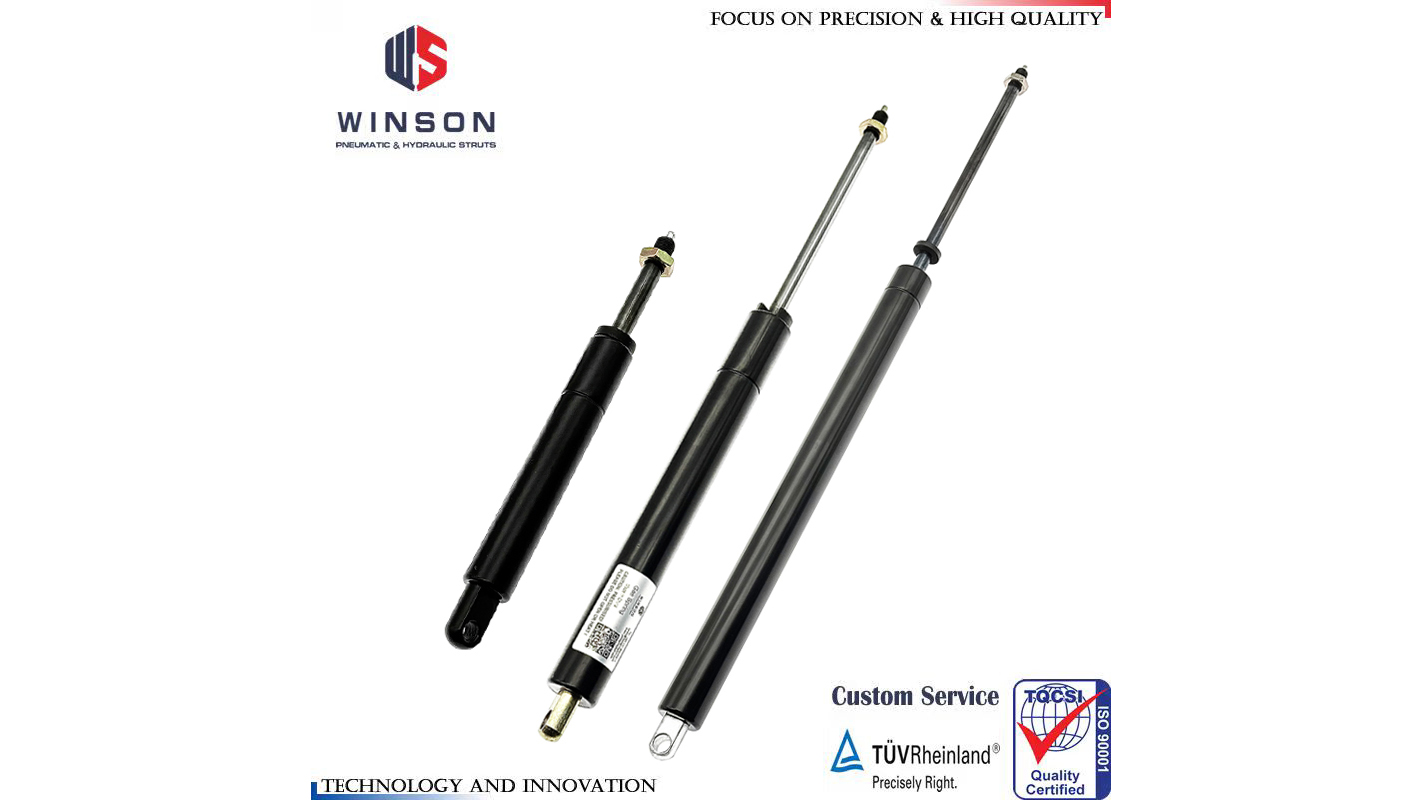
Chapter 1: How Does a Lockable Gas Spring 'Lock'?
Before analyzing failures, let's briefly understand how it works.
Inside a lockable gas spring is a precision valve system. When you operate the release mechanism (push rod, cable, or knob), the valve opens—gas flows between piston sides, and the spring moves freely. When you release, the valve closes—gas is trapped on one side, and the piston rod is 'locked' in place.
Locking function depends on three core elements:
- Valve sealing: Must close perfectly
- Gas pressure: Must provide sufficient support force
- Piston rod & seals: Must be smooth and intact
If any element fails, locking fails.
Contact Me
Chapter 2: The Three Culprits—Why Locking Fails
Culprit 1: Seal Aging (Most Common)
Symptoms:
- Slow sinking after locking (noticeable within seconds to minutes)
- 'Weak' feeling when unlocking—movement feels loose
- Occasional oil stains on the piston rod
Cause Analysis:
Lockable gas springs contain multiple seals—O-rings, oil seals, dust wipers. These rubber or polyurethane materials:
- Naturally age, hardening and losing elasticity
- Suffer temperature effects: heat accelerates aging; cold causes brittleness
- Face chemical corrosion: from degrading lubricant or environmental chemicals
When seals lose elasticity, they can't tightly contact the piston rod and cylinder wall. Gas slowly 'escapes' through microscopic gaps. When locked, gradual leakage causes the piston rod to retract.
Typical Lifespan:
- Normal office environment: 3-5 years
- High-temperature/frequent use: 1-2 years
- Extreme environments: Possibly shorter
Culprit 2: Gas Leakage (The Silent Killer)
Symptoms:
-Obvious reduced support force (previously lifted easily, now won't rise)
- Slides easily even when locked
- Shaking the spring reveals internal liquid sounds (damping oil misplaced due to low gas)
Cause Analysis:
Gas leakage often accompanies seal aging, but root may differ:
- Scratched piston rod: Surface damage scratches seals during each movement, creating leak paths
- Improper installation: Angle deviationcauses side loading, gradually wearing seals
- Overloading: Exceeding rated loads causes abnormal internal pressure, damaging seals
- Manufacturing defects: Micro-cracks in cylinder welds (rare, but possible with prolonged vibration)
Gas leakage is 'chronic'—not sudden failure, but gradual decline. When pressure falls below 70% of design value, locking basic fails.
Self-Check:
Fully compress the spring and feel the rebound force. If it feels 'soft' obviously different from a new identical model, leakage is likely.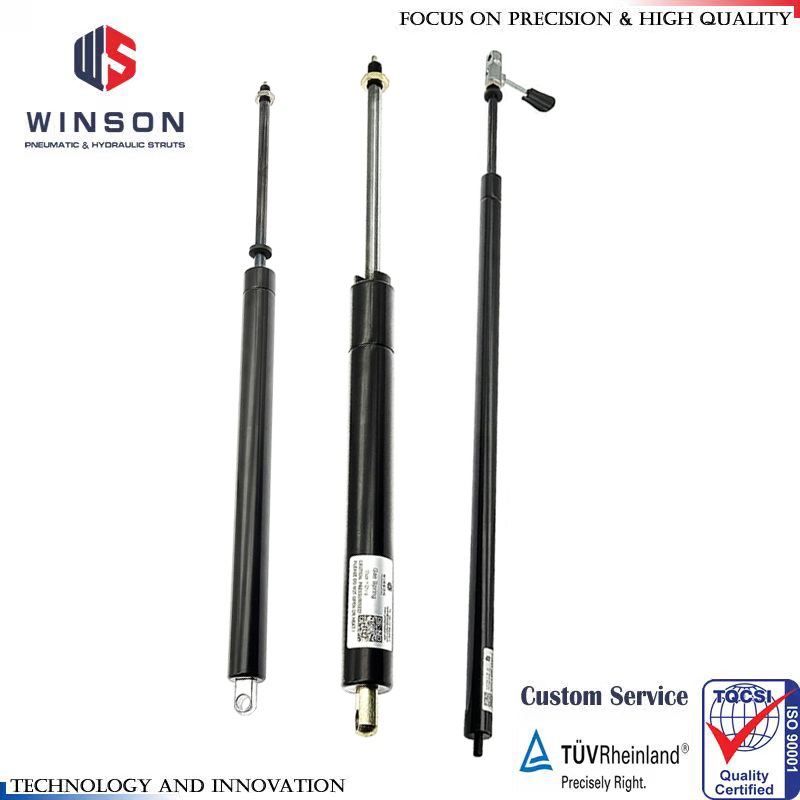
Culprit 3: Valve Wear (Direct Locking Failure)
Symptoms:
- Locked position yields easily under force (Obviously 'not tight')
- Lock/unlock feel becomes fuzzy (Originally clear 'click' gone)
- Intermittent locking—sometimes works, sometimes doesn't
Cause Analysis:
The valve is the most precise part. Inside, a valve spool and valve seat—when closed, the spool presses against the seat, sealing the gas path.
Valve wear causes:
- High-frequency use: Hundreds of lock/unlock cycles daily causes repeatedly impact wear
- Contaminant ingress: Failed dust seals allow grit to grind valve surfaces
- Poor lubrication: Internal lubricant dries, increasing spool friction and wear
- Impact overload: Sudden impacts while locked subject valve to extreme pressure, potentially deforming the seat
Valve wear is irreversible. Once the spool and seat can't form an effective seal, your gas spring becomes 'ordinary'—it supports, but won't lock.
Chapter 3: How to Judge—When to Replace?
Many ask: 'Can it be repaired?'
The answer: Almost never—and you shouldn't try.
Lockable gas springs are permanently sealed units. They're factory-filled with high-pressure nitrogen, and the fill port is permanently sealed. Disassembly is dangerous (high-pressure gas), and reassembly can't guarantee reliable sealing. Even if you replaced seals, without专业 charging equipment, original performance can't be restored.
So, when should you replace?
Criterion 1: Lock Holding Time
Simple test:
- Extend spring to mid-position, lock
- Apply rated load (or typical working weight) to piston rod tip
- Observe sinking speed
| Sinking Speed | Conclusion |
|---|---|
| No obvious movement in 30 minutes | Normal |
| Obvious sinking within 10 minutes | Minor leak, monitor |
| Obvious sinking within 1 minute | Severe leak, replace |
| Slides seconds after locking | Replace immediately |
Criterion 2: Obvious Support Force Loss
If, unlocked, the spring won't lift its load to proper height, or feels 'empty' when pushed down, pressure is critically low. Basic support function is compromised—must replace.
Criterion 3: Noise or Jerking
'Grinding' sounds or hesitation during movement indicates internal damage—possibly bent rod, broken seals, or loose components. Complete failure risk is high—replace immediately.
Criterion 4: External Damage
If you notice:
-Obvious scratches, dents, or rust on piston rod
- Cylinder dents or deformation
- Loose or cracked mounting ends
Replace regardless of function. External damage often means internal seals are also compromised, even if not yet apparent.
Chapter 4: How to Extend Service Life?
Since lockable gas springs eventually need replacement, how do you maximize their lifespan?
1. Install Correctly
- Ensure mounting angle meets design requirements (usually rod-down for better lubrication)
- Check motion track to avoid side loading
2. Avoid Overloading
- Don't exceed rated loads
- Avoid impact loads while locked (kicking, dropping heavy objects)
3. Keep Clean
- Regularly wipe dust and oil from piston rod
- Consider dust covers for dusty environments
4. Consider Usage Frequency
- Know product design life (usually rated in cycles)
- Choose appropriate grade for high-frequency applications (office chair springs rated 50,000+ cycles)
5. Regular Inspection
- Perform simple 'lock hold test' every six months
- Address anomalies early—don't wait for complete failure

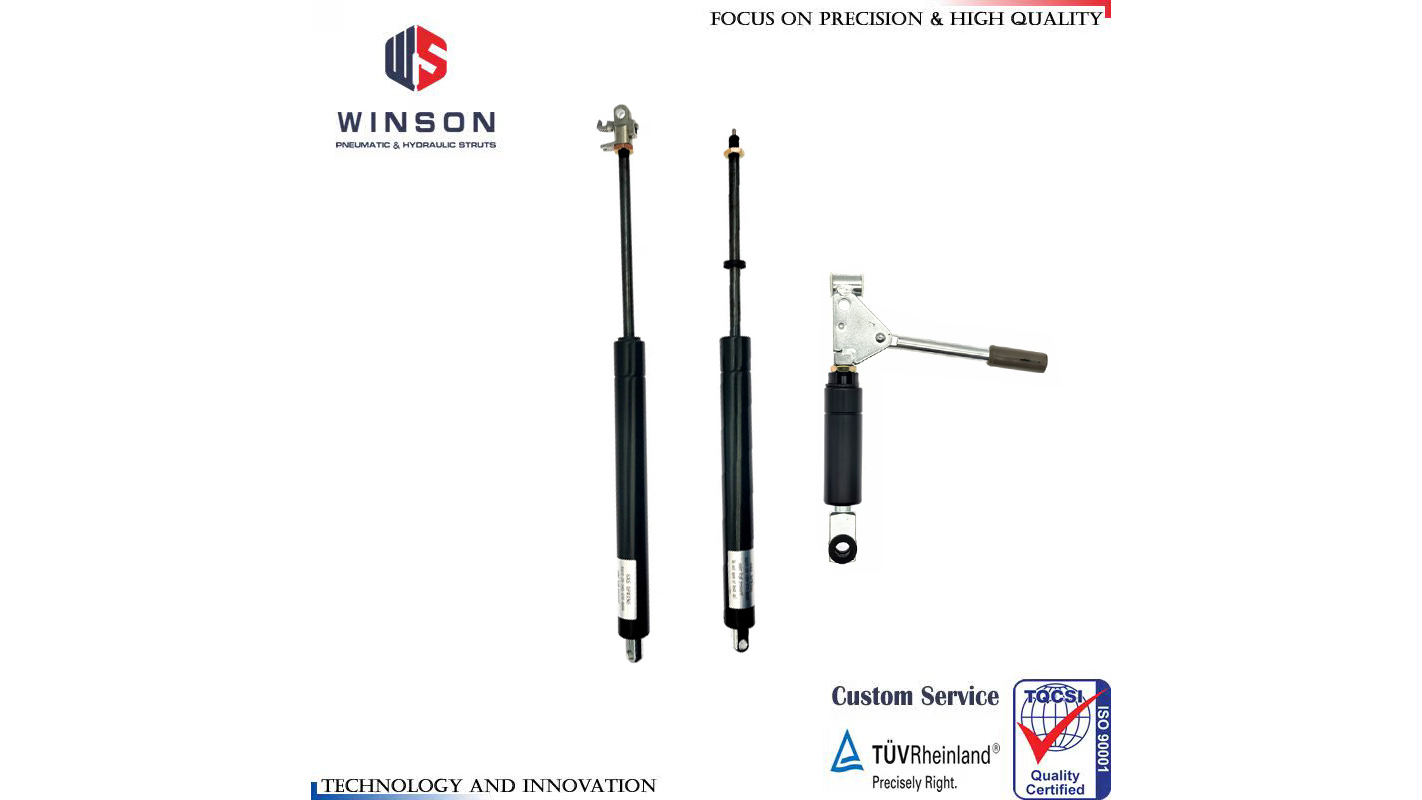
Conclusion: When It Won't Lock, It's Not 'Giving Up'
A lockable gas spring is precise and durable—but it has a lifespan. When it starts failing to lock, it's not 'giving up'—it's simply completed its mission.
Understanding failure causes and knowing when to replace prevents safety risks and keeps your equipment performing at its best.
Next time your chair starts quietly 'sneaking away,' don't blame it—time for a new one.
Have you experienced lockable gas spring failure? What equipment? How did you handle it? Share your experience in the comments.
#LockableGasSpring #GasSpringRepair #IndustrialComponents #OfficeChairRepair #GasSpringReplacement
E-Mail & Wechat Whatsapp: +86 13819751436
Top

Winson is a Chinese Gas Spring & Hydraulic Damper manufacturer specializing in custom compression, lockable, tension types and stainless steel gas springs & oil dampers for a variety of applications of automotive and vehicle, furniture, machineries, medical & fitness equipments.
Contact Us
Tel/WhatsApp:+86 0137-80014913
Email: [email protected]
Address:(14-16),No.26,Building 4,Oriental Business Center, Yinzhou, Ningbo, Zhejiang, China 315100
Copy Right @ Winson Pneumatic & Hydraulic Struts All Rights Reserved
Custom Gas Spring & Hydraulic Damper For Global Clients | Phone / WhatsApp:+86 13780014913 | Copy Right @ Winson Pneumatic & Hydraulic Struts, All Rights Reserved.
 QQ
QQ WhatsAPP
 E-mail