
Welcome to the Winson Pneumatic & Hydraulic Struts official website!
 Tel:+86 13780014913
  E-mail:[email protected]



Lockable vs. Standard Gas Springs: One Word Makes All the Difference
Author:Winson Gas Spring & Hydraulic Damper
Click:
Time:2026-02-27 09:47:30
Core Differences, How Locking Works, and When You Must Choose Lockable
One word makes all the difference.
In the world of gas springs, the word 'lockable' represents entirely different technology logic and application scenarios.
Standard gas springs help you save effort. Lockable gas springs let you have it your way—stop at any angle, stay exactly where you want, neither falling nor bouncing.
Today, we delve into the core differences between these two types and tell you: when you must choose lockable, and when standard is enough.
Contact Me
Chapter 1: Core Difference—What Is 'Locking' Function?
Standard Gas Springs: Constant Force Support
Standard gas springs work simply: the cylinder contains high-pressure nitrogen. Compressing the gas stores energy; releasing it provides thrust. The force is constant—regardless of piston rod position, the support force remains basically unchanged.
But standard gas springs have a natural limitation: they can only 'push,' not 'stop.'
When you compress them, they rebound. When you extend them, they retract. They're always 'trying' to return to their most comfortable state—fully extended or fully compressed. If you want them to stop somewhere in between, you must rely on external forces (friction, latches, pins) to hold position.
The philosophy of standard gas springs: I give you force; you figure out how to stay put.
Lockable Gas Springs: Stop at Will
Lockable gas springs add a valve control system to the standard design.
When the valve opens, gas flows freely between piston sides—the spring moves freely, just like a standard gas spring.
When the valve closes, gas is trapped on one side—the piston rod is 'locked' in place. No matter how much force you apply (within rated limits), it won't budge.
The philosophy of lockable gas springs: I give you force, and I help you stay put. You say stop—I stop.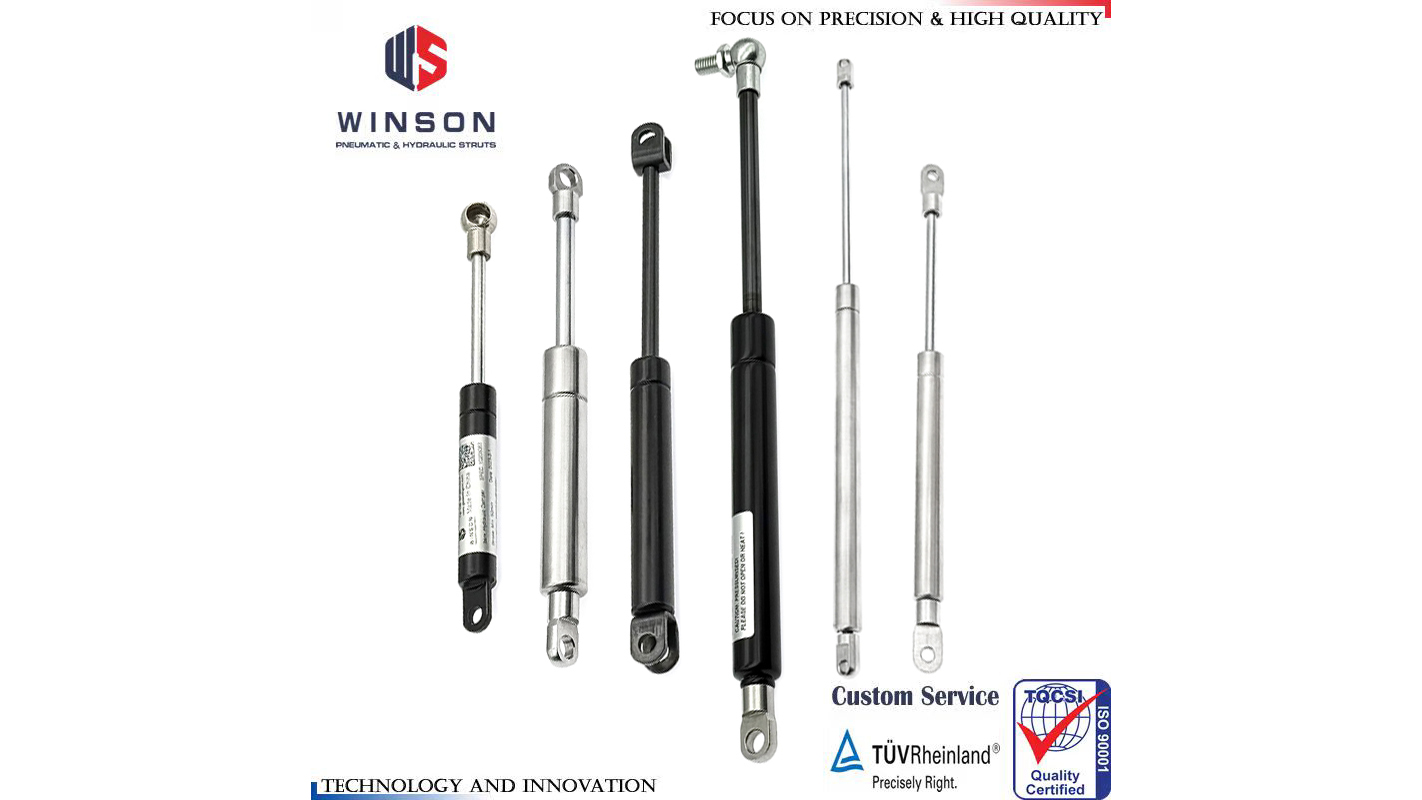
Chapter 2: How Is Locking Achieved?—Three Locking Methods
The 'locking' function of lockable gas springs is achieved through an precise internal valve system. Based on operation method, there are three main types:
1. Push-to-Lock
How it works:
- Push piston rod to desired position—automatically locks
- Push slightly again to unlock
Characteristics:
- Simplest operation, one-handed
- No external handles or cables needed
- Lock/unlock controlled by push force and stroke
Applications: Office chairs, height-adjustable chairs, frequently adjusted furniture
2. Cable-Release
How it works:
- Valve controlled by cable, handle, or lever
- Pull to open valve—free adjustment
- Release to close valve—position locks
Characteristics:
- More precise operation—lock at any position
- Release mechanism can be remotely located (cable-routed to convenient spot)
- Often requires two hands
Applications: Hospital beds, operating tables, industrial service platforms, car seats
3. Rotary Lock
How it works:
- Valve controlled by rotating piston rod
- Clockwise to lock, counterclockwise to unlock (or vice versa)
Characteristics:
- Compact design—no external attachments
- Intuitive operation—rotate to lock
- Ideal for space-constrained applications
Applications: Folding tables, monitor arms, small medical devices
Chapter 3: Application Scenarios—When Must You Use Lockable?
Not every situation needs lockable gas springs. Standard gas springs are simpler, lower cost, longer-lived—and the optimal choice for many scenarios.
So, when must you choose lockable?
Three Scenarios Where Lockable Is Essential
Scenario 1: Need for 'Stay at Any Position'
This is the core judgment criterion.
If your equipment needs to stay at any position within its stroke range—not just fully open or fully closed—you must use lockable.
Typical examples:
- Office chairs: Need to stay at different recline angles
- Hospital beds: Back and leg sections need positioning at various angles
- Monitor arms: Screens need to hover at different heights and angles
- RV beds: Folding beds need locking at different heights
Why standard won't work: Standard gas springs have only two stable states—fully compressed or fully extended. Intermediate positions require external force to maintain; any applied load causes movement.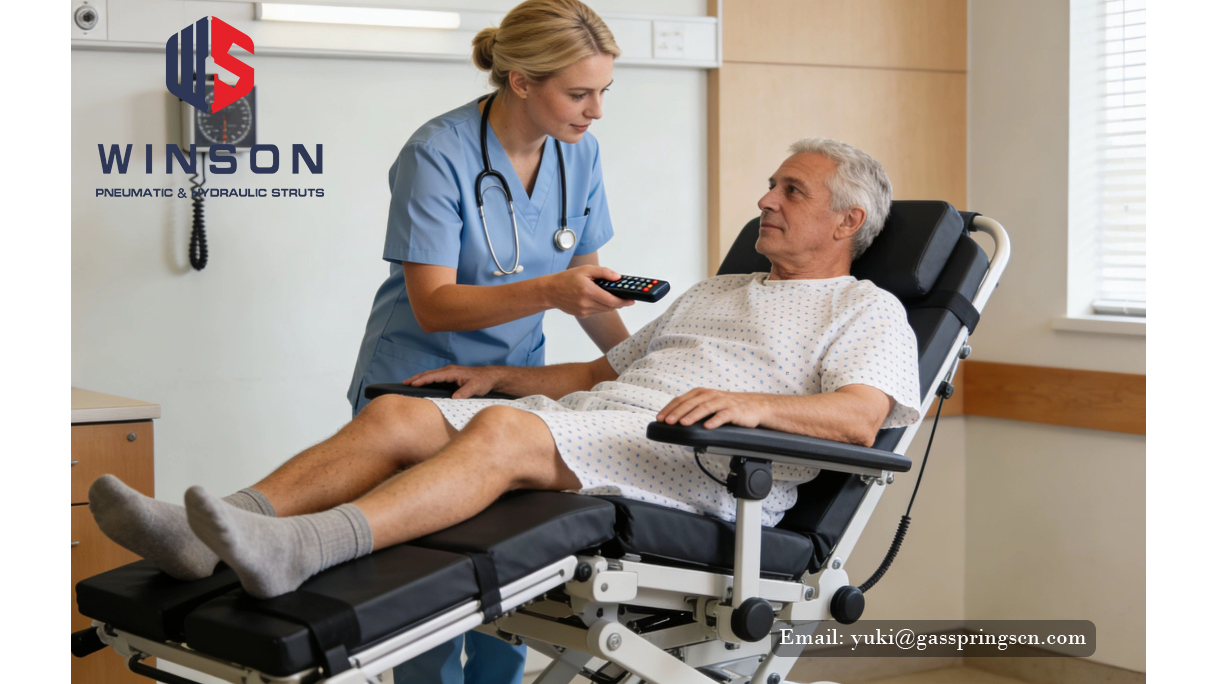
Scenario 2: High Safety Requirements
If equipment might bear loads while locked, yet needs smooth movement when unlocked, lockable is a safety necessity.
Typical examples:
- Industrial service platforms: Workers at height—platform must lock firmly, no sinking
- Hospital beds: Patients shifting position—bed sections must remain absolutely still
- Surgical lights: Must lock securely after positioning—no movement during procedures
Why standard won't work: Standard springs with external latches can achieve 'position locking,' but that's mechanical locking, not gas locking. External latches lock the mechanism; lockable gas springs lock the gas itself—more stable, safer, zero play.
Scenario 3: High Operation Frequency—Need for Convenience
If equipment needs frequent adjustment, requiring screws or pins each time kills user experience.
Typical examples:
- Co-working standing desks: Dozens of users daily—operation must be simple and intuitive
- Barber chairs: Need fast height and angle adjustment
- Rehabilitation equipment: Frequent adjustments for different patients
Why standard won't work: Standard springs require additional locking mechanisms—more steps, more tedious. Lockable springs combine adjustment and locking in one motion—users' experience is worlds apart.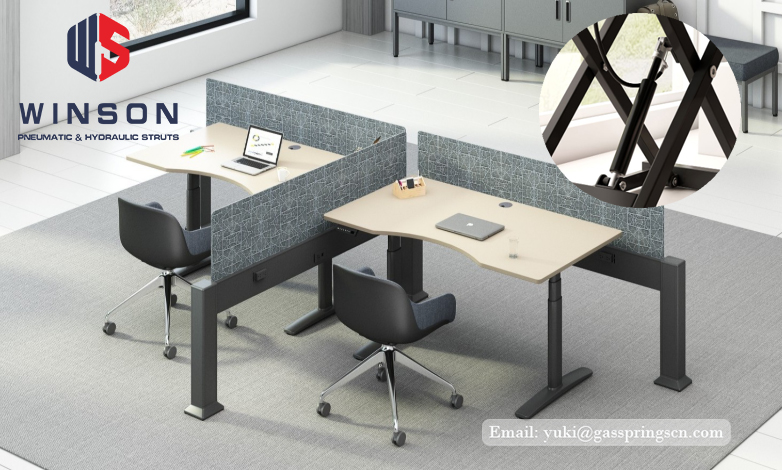
Chapter 4: When You Can Skip Lockable
Of course, many scenarios are perfectly served by standard gas springs:
1. Only Two Stable Positions
Car tailgates, engine hoods—either fully open or fully closed, no intermediate remain needed. Standard springs with limit structures work perfectly.
2. Assistive Opening Only, No Remain Required
Industrial equipment safety doors—springs assist opening; latches secure when closed. Standard springs are lower cost, more reliable.
3. Independent External Locking Mechanism
Some equipment has built-in mechanical locks (pins, latches, knobs)—gas springs only provide assistive force. Standard springs work fine.
Chapter 5: Selection Decision Tree
If you're selecting for your product, use this simple decision tree:
Need to stay at any position?
├─ Yes → Must use lockable
│    ├─ One-hand operation priority? → Push-to-Lock
│    ├─ Remote control needed? → Cable-Release
│    └─ Space constrained? → Rotary Lock
│
└─ No → Consider standard
     ├─ Only two stable positions? → Standard works
     ├─ External lock mechanism exists? → Standard works
     └─ Assistive opening only? → Standard works
Conclusion: One Word Makes All the Difference
The word 'lockable' seems like just a functional description, but it represents entirely different design philosophies:
- Standard gas springs: Provide force; you manage position
- Lockable gas springs: Provide force, and help you maintain position
Choose right—your equipment performs beautifully. Choose wrong—either functionality fails or user experience suffers.
Next time you're selecting, ask yourself: Does my equipment need to 'stop at will'?
#LockableGasSpring #StandardGasSpring #GasSpringSelection #IndustrialDesign #MechanicalEngineering
Top

Winson is a Chinese Gas Spring & Hydraulic Damper manufacturer specializing in custom compression, lockable, tension types and stainless steel gas springs & oil dampers for a variety of applications of automotive and vehicle, furniture, machineries, medical & fitness equipments.
Contact Us
Tel/WhatsApp:+86 0137-80014913
Email: [email protected]
Address:(14-16),No.26,Building 4,Oriental Business Center, Yinzhou, Ningbo, Zhejiang, China 315100
Copy Right @ Winson Pneumatic & Hydraulic Struts All Rights Reserved
Custom Gas Spring & Hydraulic Damper For Global Clients | Phone / WhatsApp:+86 13780014913 | Copy Right @ Winson Pneumatic & Hydraulic Struts, All Rights Reserved.
 QQ
QQ WhatsAPP
 E-mail