
Welcome to the Winson Pneumatic & Hydraulic Struts official website!
 Tel:+86 13780014913
  E-mail:[email protected]



Opened 40 Times a Day, Never Once Noticed: The “Invisible” Gas Spring Inside Your Trash Bin
Author:Winson Gas Spring & Hydraulic Damper
Click:
Time:2026-02-12 11:00:31
01 The Overlooked Everyday Hero
6:30 AM. You open the cabinet trash bin, tossing in the morning's first coffee filter.
10:00 AM. A colleague peels an apple, steps on the pedal, the lid rises slowly.
9:00 PM. Chopping scallions, hands greasy, you nudge the lid with your wrist. It stops mid-way, catching every scrap precisely.
Behind this seamless sequence stands an unsung hero—the gas spring.
Hidden inside a slender metal tube barely 2cm wide, it works silently over 40 times daily, more than 14,000 times a year. And you have never once looked at it.
This is the paradox of great design: the more invisible it becomes, the better it has done its job.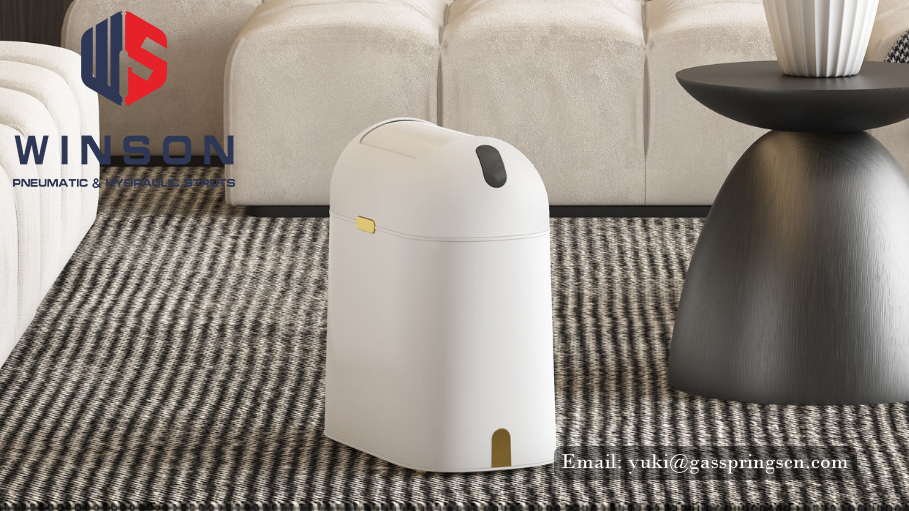
02 Before the Gas Spring Arrived
Let's rewind 20 years.
Back then, kitchen trash bins came in two varieties:
Pedal bins — Step on the pedal, the lid flies open like a startled frog. Release your foot, it slams shut like thunder. Tossing fruit peel at dawn? The whole house wakes up.
Manual lift bins — More straightforward, but when your hands are covered in oil, you pinch the lid edge carefully, lift cautiously. Slip once, the lid snaps back—another deafening crash.
Our kitchens back then had plenty of “lively energy.” What they lacked was dignity.
Then gas springs entered the home.
Contact Me
03 What the Gas Spring Changed
① Sound: From BANG to SHHH
Conventional mechanical springs rely on metal deformation. They snap fast, hit hard, and noise is inevitable.
A gas spring runs on pressurized nitrogen. Sealed inside a precision cylinder, the gas releases progressively through micro-buffered channels as the piston moves.
It doesn't snap open—it glides open. It doesn't slam shut—it settles shut.
Measured data: premium gas springs in trash bins operate below 35 decibels — quieter than flipping pages in a library. Late-night kitchen trips no longer wake the household.
② Hands: From Pinch to Nudge
Traditional bins require precision: aim correctly, control the force, avoid slipping.
Gas springs introduced stay-anywhere functionality.
A gentle nudge, the lid glides to 30° and stops. Toss the waste, nudge again, it continues closing. Chopping vegetables? Prop the lid half-open and sweep scraps in with one hand—the other never puts down the knife.
The bin no longer demands adaptation. It simply adapts.
③ Time: From One Year to Ten
Conventional springs begin to weaken after about a year. The lid starts to “droop”—won't close fully, won't stay up, sometimes even slides down on its own.
A gas spring is engineered for 100,000 cycles.
For a household opening the bin 40 times daily, that's over 7 years of consistent performance. Seven years later, the support force remains steady. The lid still stays exactly where you leave it.
It does age. Just very, very slowly.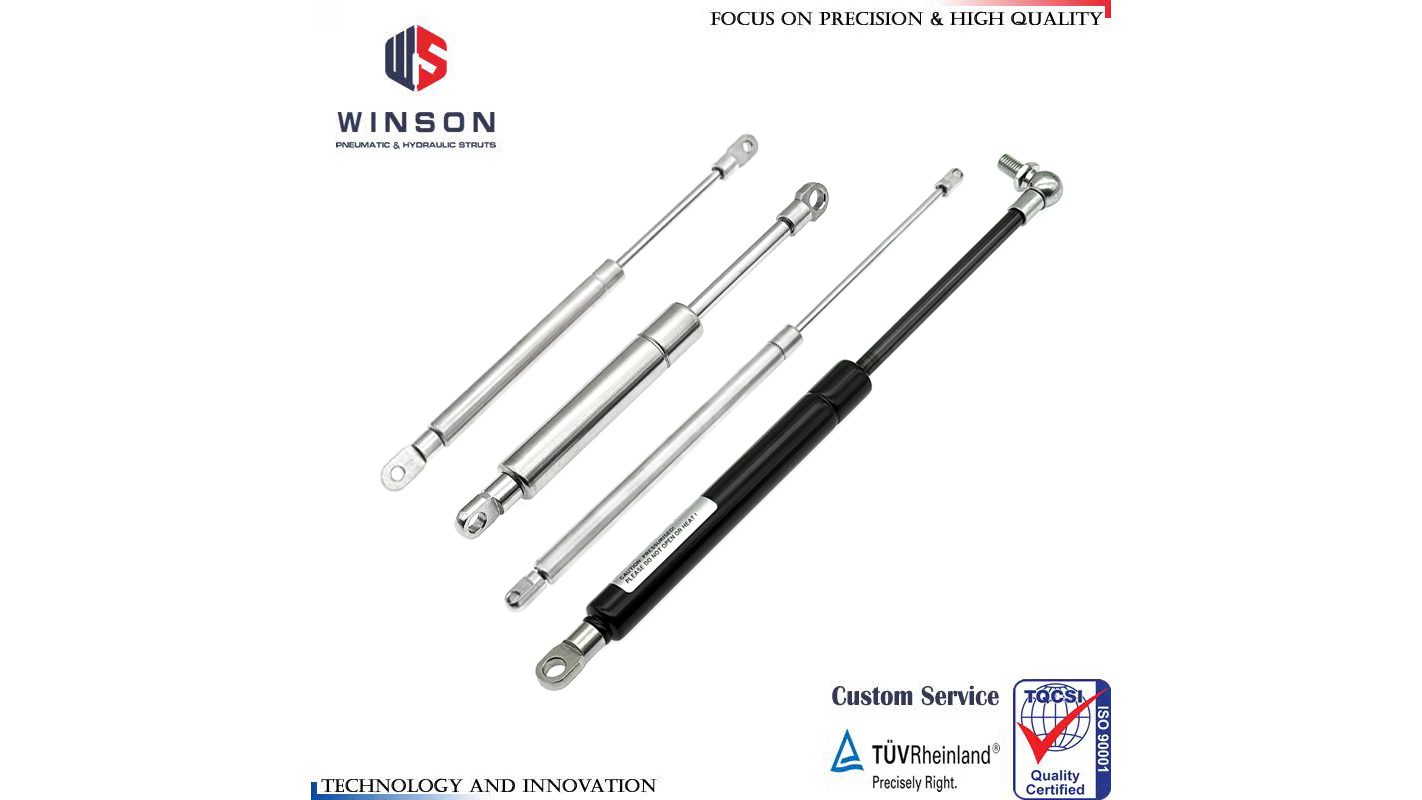
04 The Price of Invisibility
05 From Trash Bins to Lifestyle
Interestingly, once gas springs proved themselves in trash bins, they began to “cross over”:
Smart sorting bins with multiple compartments—each lid powered by its own gas spring
Built-in cabinet systems hiding bins behind panels—gas springs manage the synchronized open/close
Medical waste containers demanding near-silent operation—preserving peace in hospital wards
A humble support component has become the “silent passport” to premium living and professional equipment.
06 One Small Experiment
Tonight, walk into your kitchen.
Open the trash bin. Watch the lid rise smoothly.
Nudge it gently. See it stop mid-air, steady.
Let go. Observe it close silently.
Throughout this entire sequence—no impact, no noise, no hesitation.
Notice the gas spring?
Probably not.
And that's exactly how it wants it.
Great design never asks for credit.
#KitchenDesign #TrashCanLid #StorageSolutions #GasSpring #SmartHome #EverydayEvolution #InoxGasSpring
Top

Winson is a Chinese Gas Spring & Hydraulic Damper manufacturer specializing in custom compression, lockable, tension types and stainless steel gas springs & oil dampers for a variety of applications of automotive and vehicle, furniture, machineries, medical & fitness equipments.
Contact Us
Tel/WhatsApp:+86 0137-80014913
Email: [email protected]
Address:(14-16),No.26,Building 4,Oriental Business Center, Yinzhou, Ningbo, Zhejiang, China 315100
Copy Right @ Winson Pneumatic & Hydraulic Struts All Rights Reserved
Custom Gas Spring & Hydraulic Damper For Global Clients | Phone / WhatsApp:+86 13780014913 | Copy Right @ Winson Pneumatic & Hydraulic Struts, All Rights Reserved.
 QQ
QQ WhatsAPP
 E-mail