Welcome to the Winson Pneumatic & Hydraulic Struts official website!
 Tel:+86 13780014913
  E-mail:[email protected]



Rigid Locking Gas Springs: Engineering's Answer to Absolute Certainty
Author:Winson Gas Spring & Hydraulic Damper
Click:
Time:2026-02-11 13:11:01
In gas spring technology, two philosophies exist: compressible gas springs for flexible cushioning, and rigid locking gas springs—today's focus. Once locked, they stand firm as adjustable steel pillars.
Core Principle: Dual-Valve Engineering
• Free Mode: Unlocked piston rod moves freely
• Locked Mode: Closed valve creates sealed chamber; high-pressure nitrogen becomes incompressible, delivering near-solid rigidity
Contact Me
Four Applications Where Locking Gas Springs Are Irreplaceable
1. Life Support in Medical Equipment
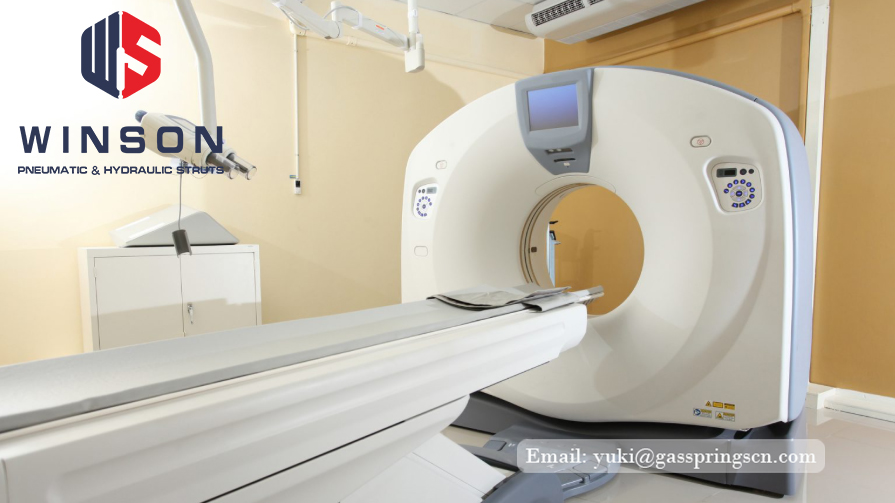
Imagine a million-dollar CT scanner with moving parts weighing hundreds of kilograms. When doctors need to position a patient at a specific angle for scanning, any slight slippage could cause image blurring or require rescanning.
Locking gas springs provide sub-millimeter positioning accuracy here. During a 30-minute scan, position drift is less than 0.1mm—a level of certainty flexible gas springs cannot achieve.
2. 'Fail-Safe' Design for Industrial Safety Doors
In heavy machinery factories, protective doors must remain locked in the fully open position for safe maintenance access. Accidental door closure could have disastrous consequences.
Systems using locking gas springs keep doors in the open position even with complete loss of external power. This 'fail-safe' feature has become a safety standard in many industries.
3. Aerospace Ground Support Equipment
During aircraft maintenance, large access platforms need to remain at precise heights. Wind variations and personnel movement create dynamic loads.
Locking gas springs not only provide support but actively counteract these dynamic forces to maintain platform stability. One aircraft manufacturer's test data showed a 73% reduction in platform vibration amplitude after implementing locking gas springs.
4. Tilting Engine Hoods for Heavy Vehicles
Truck engine hoods can weigh over 100kg and need to be tilted to specific angles and held stable during maintenance. Standard gas springs might allow position drift due to temperature changes or gas leakage.
Locking gas springs maintain consistent locking force even in extreme temperatures from -40°C to +80°C, ensuring technician safety.
Performance Comparison
| Parameter | Premium Flexible | Rigid Locking |
| Position Accuracy | ±2mm/hour | ±0.1mm/hour |
| Temp Sensitivity | 2%/10°C | <0.5%/10°C |
| Long-term Stability | 3-5%/year decay | <1%/year decay |
| Sudden Load Response | Cushioned compression | Near-zero displacement |
Four Selection Criteria
1. Lock-to-unlock force ratio >10:1
2. Wide-temperature performance retention
3. Seal life ≥50,000 locking cycles
4. Safety factor ≥2.5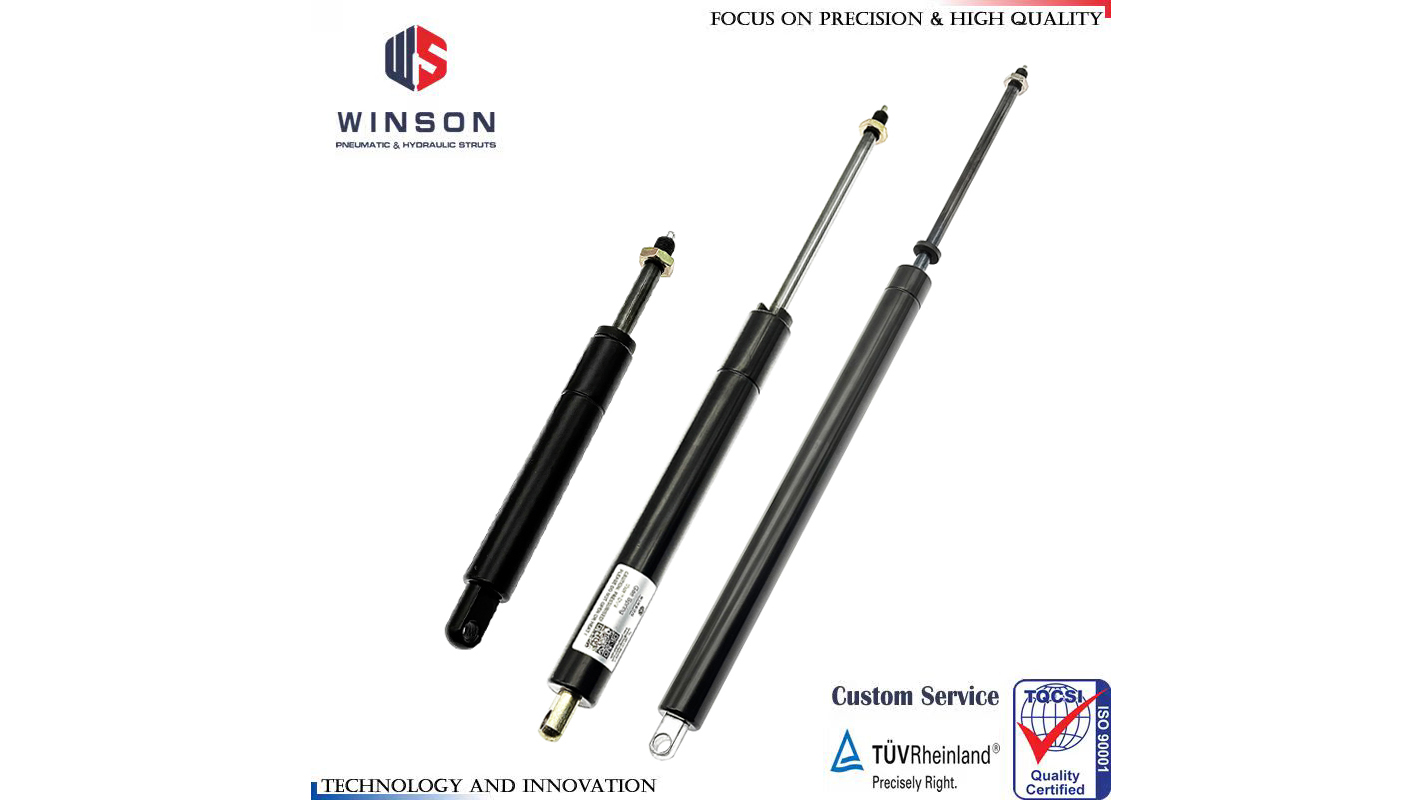
Future: Intelligent Evolution
Next-gen models will integrate position sensors, pressure monitoring, and wireless control—evolving from passive components to active safety nodes.
Conclusion
Rigid locking gas springs embody an engineering philosophy: comfort where flexibility is allowed, absolute reliability where certainty is required. When your design faces the 'must-not-move' challenge, this half-century-proven technology delivers the certainty you need.
You are under no obligation to purchase, but I am always here to assist. Please feel free to reach out if you have any questions. Click one of the option below.
E-Mail & Wechat Whatsapp: +86 13819751436
Top

Winson is a Chinese Gas Spring & Hydraulic Damper manufacturer specializing in custom compression, lockable, tension types and stainless steel gas springs & oil dampers for a variety of applications of automotive and vehicle, furniture, machineries, medical & fitness equipments.
Contact Us
Tel/WhatsApp:+86 0137-80014913
Email: [email protected]
Address:(14-16),No.26,Building 4,Oriental Business Center, Yinzhou, Ningbo, Zhejiang, China 315100
Copy Right @ Winson Pneumatic & Hydraulic Struts All Rights Reserved
Custom Gas Spring & Hydraulic Damper For Global Clients | Phone / WhatsApp:+86 13780014913 | Copy Right @ Winson Pneumatic & Hydraulic Struts, All Rights Reserved.
 QQ
QQ WhatsAPP
 E-mail